
IT & OrganizationsFor IT, support teams, and organizations responsible for Internet connections, customers, locations, and critical services.Explore IT & Organizations →
Internet problems, investigated and explained
ISP Tracker uses real connection measurements to detect and investigate Internet problems, helping identify what happened, where the problem may have started, and whether it keeps repeating.
Measurements, turned into answers
ISP Tracker keeps watching while you are away, preserves evidence after a problem has passed, and explains what the measurements suggest.
You see the useful conclusion first, with the underlying events and history available when you want to examine them.
Two interruptions happened beyond your router.
Your connection dropped twice overnight. Both events appeared beyond your local router, pointing toward the provider side of the connection.
Why it matters: Helps show whether the issue was inside your home or outside it.
Short interruptions kept breaking live services.
We saw repeated short interruptions this week. Each one was under a minute, but long enough to interrupt calls, games, or remote work.
Why it matters: Short outages still matter when they break live services.
The connection stayed up, but name lookups failed.
Your router stayed reachable, but DNS checks failed for several minutes. The connection was up, but name lookups were unreliable.
Why it matters: Helps separate Internet access problems from DNS problems.
Other locations could reach the website.
This website was reachable from other monitored locations, but not from your area during the same window.
Why it matters: Helps show when the problem is not simply “the website is down.”
Related interruptions appeared across one provider.
Multiple locations using the same provider reported interruptions close together. ISP Tracker treated this as provider-side activity, not one isolated site.
Why it matters: Helps identify wider issues as they develop.
A recurring morning pattern became visible.
This location had recurring morning latency spikes. The pattern may be useful when discussing service quality with the provider.
Why it matters: Gives you a record instead of relying on memory.
Your router stayed online during the interruption.
Your local router stayed online, but the next provider-side connection stopped responding for six minutes.
Why it matters: Helps avoid wasting time replacing equipment that was not the cause.
Other monitored areas stayed online.
Other monitored areas stayed online while your area showed reachability problems.
Why it matters: Points toward a local provider issue instead of a broad website outage.
A nearby location saw something similar.
A nearby monitoring location saw a similar interruption within the same time window.
Why it matters: Helps show when the issue may affect more than one home or business.
The website remained reachable elsewhere.
The website was reachable elsewhere, but not from this provider path.
Why it matters: Helps separate a website outage from a routing or provider problem.
A short interruption matched an earlier pattern.
The interruption cleared quickly, but it matched several earlier short drops this week.
Why it matters: Short problems can reveal a pattern when they keep repeating.
The interruption happened during business hours.
The connection dropped long enough to interrupt calls, payments, or remote access.
Why it matters: Gives small businesses evidence they can actually use.
Homes & Businesses
Understand what is happening with the Internet connection a home, office, business, branch, or other location depends on.
See what monitoring recorded before, during, and after an Internet problem.
Help distinguish problems inside the location from problems involving the provider or Internet beyond it.
See whether monitoring from other locations or the surrounding area shows similar problems.
Maintain monitoring and history so the information is still available after the problem has passed.
See what ISP Tracker can tell you
INTERNET KEEPS DROPPINGOverall Internet Health
Your connection needs attention today. ISP Tracker saw several short connection drops, while speed tests were mostly usable but below your configured download speed. Wi-Fi on HomeOffice-5G looked mostly stable, so the bigger issue may be the Internet connection itself rather than the local wireless network.
Connect the evidence across locations
Compare interruptions across customers, branches, and services. See which locations are affected, which remain healthy, and what their network paths have in common.
Matching timing across independent locations can reveal a shared pattern and help teams focus the investigation sooner.
Their paths share the same provider. The comparison location stayed reachable.
A shared provider and matching timing suggest a relationship; they do not prove the provider caused the problem.See what ISP Tracker can tell you
ALL LOCATIONS AT A GLANCEOrganization Internet Summary
Overall Internet health is mostly stable today.
72 monitored locations are active. 65 look normal, 5 are worth watching, and 2 need attention.
The most common issue today is repeated short connection drops at individual locations, not a company-wide outage.
No shared VPN, website, or monitored business service failure is currently visible across the organization.
Real situations across customers, locations, and services
The value becomes clear when the right evidence prevents wasted time, unnecessary changes, and troubleshooting in the wrong place.
The customer location couldn't consistently reach Microsoft's network.
The agent gives ISP Tracker its point of view
An ISP Tracker agent runs from your home, office, or monitored site. It provides a real-world view of what your connection is doing, so reports are based on measurements from where the problem is actually felt.
Use the desktop or hardware agent for full monitoring. The mobile app, coming soon, will help you view Local Status, receive alerts, and contribute lightweight mobile-network reports. It will not replace the installed monitoring agent.
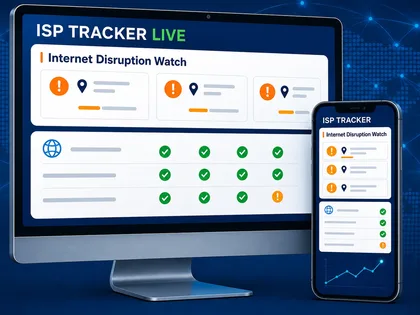
Real measurements, useful context
Go deeper when you need to, without making raw technical data the first thing everyone must understand.
Better local data starts with more monitoring locations
If your provider or area does not have strong reports yet, adding an agent helps ISP Tracker understand what is happening there. More nearby agents make it easier to tell whether an issue is local, provider-side, or wider.
Stop guessing what happened to your Internet.
Start with free monitoring and let ISP Tracker turn connection data into answers.